Part 1
- Symbols, characters, actions and attitudes
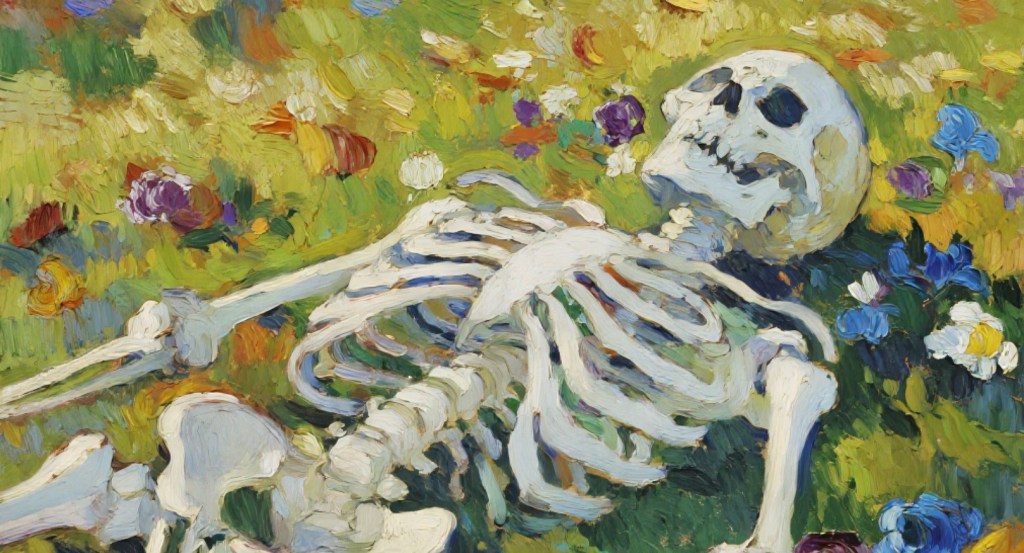
The sea is represented as something dangerous and unknown, as well as the place where transformation happens.The fisherman demonstrates loneliness, desperation and risk-taking. He is desperate to find food so he goes to fish in a forbidden area. When he finds the skeleton of a woman he is frightened at first, however he takes the risk to save her. Death represents not an ending, but a chance for a new beginning.
2. Possible symbolic and literal meaning
The literal meaning of the story is that a hungry fisherman accidentally finds a skeleton of a woman in the sea. Later the woman regenerates thanks to the interactions between her and the fisherman.
Symbolic:The skeleton in the story stands for pain and suffering that people experience. Lots of people get hurt in their lives since they may go through personal challenges such as broken hearts. For people whose heart feels broken, warmth and care can give them inner strength. This support helps them find courage to recover and start their life from a new page.
3. The human needs and desires the tales address
This story shows people’s real wishes. People hope to be treated correctly, receive love and heal during difficult times. They also hope for a chance to build a better life and get company from others. At the same time, the tale tells us about the hard parts of human life. People experience suffering, pain, death and hopelessness. The story gives us a clear understanding on how to face these difficulties. We need to give warmth and kindness to people who may be struggling. Love and care can help anyone get through dark times and feel complete.
4. the specific morals and values found in the tale
Among the key values it teaches us love and compassion, as it demonstrates the importance of caring for others even in the most difficult situations. Courage and resilience are also highlighted; the story shows characters facing various complex challenges yet pressing forward bravely— not because they lack fear, but because they manage to confront it despite that fear. It also teaches us acceptance, showing that it is better to accept what has happened and focus on finding a solution and learning from the experience, rather than dwelling on regrets.
5. The ways the tales could be used to learn about the Inuit culture
The Inuit folktale carries deep cultural meaning for the community. The tale passes on important Inuit values and morals, teaching people how to respect nature and support one another in the tough Arctic environment. We can learn a lot about Inuit culture from this folktale. For generations, Inuit people share these stories to pass down their beliefs, survival skills and world views. The oral tales help young people understand how their ancestors lived and respected the harsh natural world around them.
Part 2
1.Basic summaries of each folktale and how they are similar and different. Possible literal and symbolic meanings of the tales.
Symbolical:the magical otherworld stands for eternal youth and endless pleasure. The stories show that time and aging are natural rules that humans cannot break. The stories talk about two human desires: people wish to stay young and avoid aging and death. Meanwhile, people have a deep need for home, family and belonging. The central human’s problem existence here is that human life is short. We will grow old and lose our loved ones. The solution the tales offer is the we must accept time and natural change. If we try to escape our human life, we will lose everything we care about. I do not think this is a good solution. The hero pays a terrible price. He loses all his family and his whole past life just because he visited the magic world. It shows we cannot run away from our human life.
The recurring theme shared by Tír na nÓg and Urashima Taro is not merely “time moves differently in fairyland”. More deeply, these tales explore the irreversible nature of human mortality and memory. Mortals enter an eternal, timeless realm where sorrow, ageing and loss do not exist. They indulge in this perfect, suspended reality, yet their humanity still ties them to the finite world they left behind. When they return, time has swept away everything they once loved.
2. Does this theme, or a similar theme, reappear in tales originating from your country or elsewhere?
This theme also appears in the Chinese legend of Wang Zhi of Lanke Mountain. Like Oisín and Urashima, Wang Zhi steps into a space outside ordinary human time. He witnesses a peaceful, immortal world, and forgets the passing of mortal years. When he returns, his old life has vanished completely.
Across Irish, Japanese and Chinese folklore, the story carries the same quiet warning. Bliss that exists outside the flow of human time cannot belong to mortals. The loss is not just about lost family or homes. It represents the tragedy: once you escape the hardship of mortal time, you will be alienated forever from your own identity, memories and roots. These stories teach us that time, grief and aging are what make human life meaningful.
3. Unusual, exciting, or strange about this myth. How is this story similar to or different from your ideas of how people and of how a story should be told?
It is strange that Taro leaves his mother, even though he worries about her at first. At the place, he enjoys his new life so much that he forgets about the people he left behind. This seems realistic to me because people can get excited about something new and forget their responsibilities. However, it was expected for Taro’s kindness in saving the turtle to bring him a happy ending. The story is different from what I’ve expected because doing something good does not protect him from sadness or loss.
The ending is also unusual. Hundreds of years pass while Taro is at the place, and the story does not fully explain how the box works or if he could have changed what happened. Usually, we expect stories to explain their message clearly, so this ending feels mysterious. It makes readers think that time keeps moving forward, even when people want to return to their old lives.
4.Try to identify and categorise the culture found in the tales in terms of at least three of the six dimensions of culture.
Masculinity vs Femininity
Although both tales have masculine and feminine characteristics, Urashima taro emphasizes femininity while Tír na nÓg masculinity. In Urashima Taro the fisherman saves the turtle from a group of children. It shows his compassion and care for other creatures rather than competitiveness. In Tír na nÓg masculinity is shown through Oisin’s bravery in entering a new world. However there are masculine qualities in both tales that the courage and bravery to leave their home and travel to an unknown place.
Uncertainty avoidance
Both tales present uncertainty avoidance in the human desire to explore new and unknown lands. The tale Tír na nOg demonstrates lower uncertainty avoidance. Oisin bravely leaves his home land with Niamh and takes a risk to face a new world. Niamh clearly states possible consequences of disobeying the warning about the returning to Ireland and Oisin is aware of potential dangers. Urashima Taro presents higher uncertainty avoidance. Before Urashima’s return from the Dragon Palace, he got a box and was told to never open it. Because he never got any specific information about possible outcomes, he is unsure of what might happen if he doesn’t follow the rule.
Individualism vs collectivism
Both tales teach us about emotional connection and importance of remembering our family connections. In Tír na nÓg, Oisin’s decision to travel to a new land demonstrates his personal choices and desires. However, his emotional attachment remains as he misses his family and homeland. In Urashima taro collectivism is presented through the way Urashima saves the turtle. In addition, his sense of responsibility is shown through the way he cared for his mother his entire life.
Basic summaries, similarities, differences and possible literal and symbolic meanings
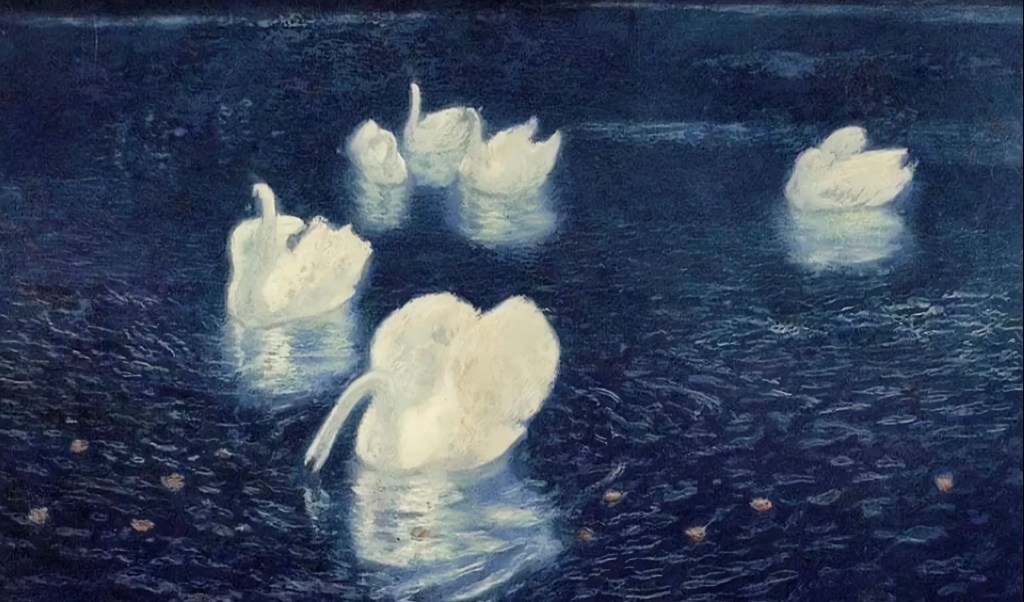
La Llorona is a Mexican legend about a beautiful woman, who drowns her children and later regrets her actions. After she dies, her spirit cannot find peace and wanders along rivers, looking for her children. Children of Lir is an Irish story about four children whose jealous stepmother, Aoife, turns them into swans.
Both tales share similarities in how they teach us that harmful actions have consequences and can affect others. Family suffering and children’s loss from their parents are represented. Both women are driven by strong emotions such as jealousy and grief, which lead them to do tragedy. The tales contain supernatural elements such as wandering ghosts and transformation into swans. Water and lakes are the most similar symbols, demonstrating that water is a place associated with suffering and loss.
There are also differences between the tales. In La Llorona, María suffers from her own actions and the children in the Children of Lir are victims of the actions of their stepmother. The Mexican tale reflects Mexican culture and beliefs about spirits and the Irish tale includes Christian symbols such as church bells.
Literally, La Llorona presents how strong emotions can blur someone’s mind and tells about the consequences of harmful actions. The symbolic meaning shows that she is guilty and regrets what she has done but cannot return for her actions.
The Children of Lir teaches that families can be easily destroyed by jealousy and intense emotions. Symbolically, the swans show a lack of freedom and how family bonds can help you get through difficult times.
Which human needs and desires do the tales address? Do you think the solution is a good one? Does this theme, or a similar theme, reappear in tales originating from your country or elsewhere?
These two stories show people’s need for family love and safe feeling. We want our family to stay with us, and we want to stay away from pain. Both stories talk about pain from bad family relationships.
In Children of Lir, the stepmother is very cruel. She turns four children into swans. The children wait for many years until the curse ends. This way needs lots of patience.
In La Llorona, after the mother’s husband leaves, she hurts her own child. She lives in sadness forever, and nothing can fix it. I think the way in Children of Lir is not good. The children suffer for too long. The ending of La Llorona is also very sad. She does not try any better ways to solve the problem.
We can find similar themes in many other stories.
For example, many old Chinese stories also talk about hurt in families and jealousy.Some innocent people get hurt because of other people’s bad feelings.Just like these two stories, these stories tell us that strong bad feelings can bring great harm.
Try to identify and categorise the culture found in the tales in terms of at least three of the six dimensions of culture.
Masculinity vs Femininity
Neither story is fully masculine. They both lean toward femininity. In Children of Lir, the four swan children care for each other and value family love instead of fighting for power. In La Llorona, the whole story centres on the mother’s deep sadness. It talks about emotion rather than competition.
Uncertainty Avoidance
Both tales show high uncertainty avoidance. People are afraid of unpredictable bad results. In Children of Lir, nobody knows how long the curse will last. In La Llorona, once the mother makes her terrible choice, nothing can change what happens. The stories warn us that we should be careful because some outcomes cannot be fixed.
Individualism vs Collectivism
La Llorona is more individualistic. The mother only focuses on her own pain. She lets her sadness take over and does not think about her children.
Children of Lir shows collectivist ideas. The children stay together and support one another through centuries of suffering. Their family connection helps them keep going.
puzzling, unusual, exciting, or strange about this myth. How is this story similar to or different from your ideas of how people and of how a story should be told?
One strange thing in The Children of Lir is that the children are swans for 900 years, but they can still talk and remember their family. It is hard to imagine what that would be like. They have to live through many years of cold weather and difficult journeys, while everyone they knew grows old or dies.
The ending is also surprising. The spell is finally broken, but the children are old, and they die soon after becoming human again. In many stories, the characters get a happy ending once they are rescued. Here, that does not happen.
The tale shows how one person’s jealousy can cause a lot of suffering for others. It also shows the children staying close and helping each other through a very difficult time. The magic makes the story unusual, but the feelings in it jealousy, sadness and love for family are familiar.